“If I knew I was going to live this long, I would have taken better care of myself!” – George Burns
As we age, bone mass and muscle mass begin to deteriorate, making it hard to do the daily activities we once enjoyed. However, this is a process that has the potential to be reversible. Called sarcopenia, this loss of muscle – which begins around age 50 – is linked with low bone-mineral densities, falls, fractures and insulin resistance, which may be an early sign of early Alzheimer’s disease. Exercise – at any age – can help to increase bone density and muscle mass. (O’Brien, 2017) .
Regular exercise can help prevent heart disease, diabetes, and also reduce pain associated with arthritis. (Winderlich, 2010)
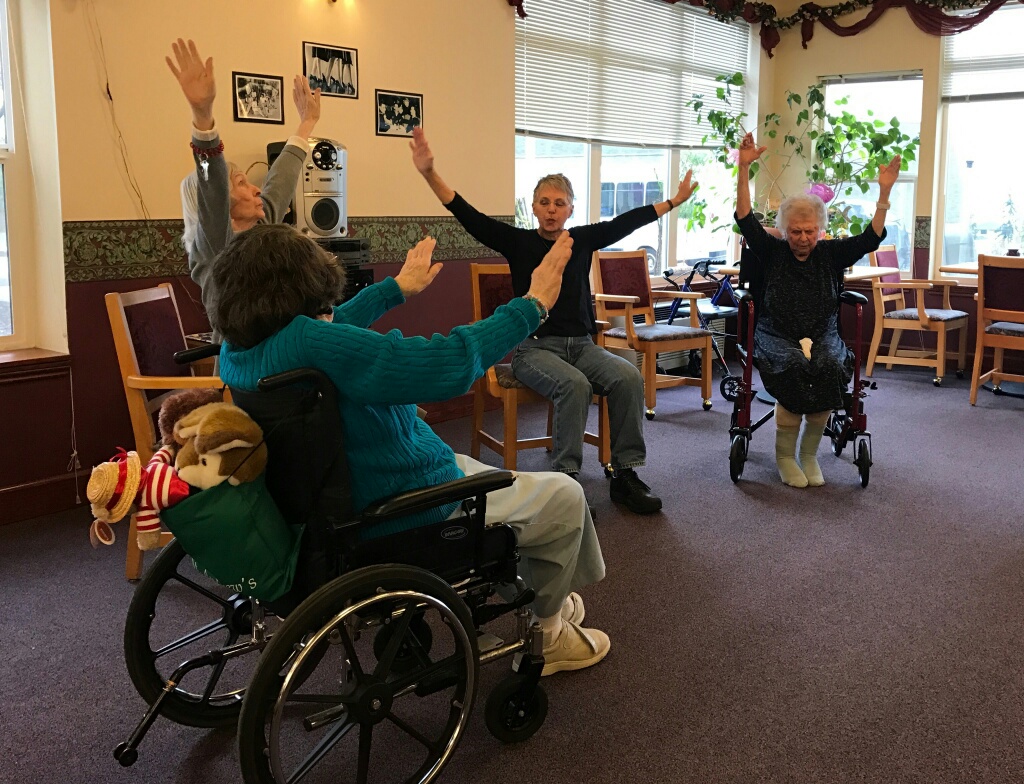
Many believe that with age, exercise becomes impossible to do. However, there are many things that can be done at any age and fitness level.
The American College of Sports Medicine and the American Heart Association has published guidelines for physical activity in older adults. A summary of the recommendations includes:
Aerobic exercise: To promote and maintain health, older adults need moderate-intensity aerobic physical activity for a minimum of 30 minutes five days each week or vigorous intensity aerobic activity for a minimum of 20 minutes three days each week. (Richard Weil, 2015)
Exercise to Try: Swimming.
Researchers in Australia looked at about 1,700 men ages 70 and older, and compared the types of exercise the men did with their likelihood of experiencing a fall over a four-year period. There were nearly 2,700 falls during the study.
Men in the study who swam were 33 percent less likely to fall compared with all men in the study. In contrast, the men who did other forms of exercise — including golfing, doing calisthenics, working out on treadmills — were no less likely to fall, the researchers found. (Rowan, 2014)
Resistance exercise: To promote and maintain health and physical independence, older adults will benefit from performing activities that maintain or increase muscular strength and endurance for a minimum of two days each week. It is recommended that 8 to 10 exercises be performed on two or more nonconsecutive days per week using the major muscle groups. (Richard Weil, 2015)
Exercise to Try: Sit-backs
Sit-backs are a variation of sit-ups and will strengthen your core muscles, which will allow you greater mobility for everyday tasks such as getting out of bed or rising from chair. This exercise will be done on the floor using gravity and body weight for resistance.
- Begin sitting on the floor with knees bent and your arms crossed in front of your chest, as if you’re giving yourself a hug
- Slowly sit back as far as is comfortable (this doesn’t have to be a very big movement). The key is to remember to engage your core, and avoid rounding your back. It can be helpful to have someone sitting by your feet, to prevent your feet from lifting off the floor. Return to the starting position
- Repeat 10 times (Mercola, 2015)
Flexibility exercise: To maintain the flexibility necessary for regular physical activity and daily life, older adults should perform activities that maintain or increase flexibility at least two days each week for at least 10 minutes each day. (Richard Weil, 2015)
Exercise to Try: Double Hip Rotation
Used to stretch the outer muscles of hips and thighs.
Important: If you have had a hip replacement, do NOT perform double hip rotation exercises without permission from your surgeon.
- Lie on floor on your back, knees bent and feet flat on the floor.
- Keep shoulders on floor at all times.
- Keep knees bent together and gently lower legs to one side as far as possible without forcing them.
- Hold position for 10 to 30 seconds.
- Return legs to upright position. (O’Brien, Stretching Exercises for Seniors: Increase Freedom of Movement, n.d.)
Balance exercise: To reduce risk of injury from falls, older adults with substantial risk of falls (those with frequent falls or mobility problems) should perform exercises that maintain or improve balance. (Richard Weil, 2015)
Exercise to Try: Tai Chi excellent for this because it involves slow, coordinated movements, and is particularly beneficial for balance since you lift one leg frequently while doing it. (Lim, n.d.)